
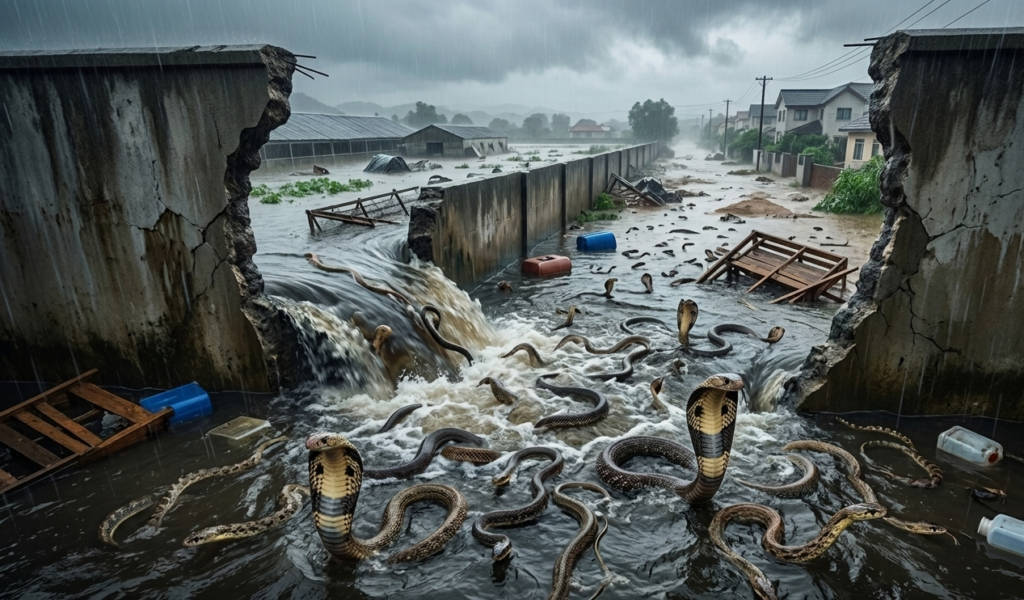
A bizarre and terrifying event recently unfolded in China when severe floodwaters washed away a commercial breeding farm, releasing nearly 900 snakes into nearby residential areas. The incident happened in Hengzhou, a city in the southern Guangxi region, following relentless rains and destruction brought by Typhoon Maysak.
The floodwaters completely broke down the perimeter walls of the local snake farm. This catastrophic breach allowed hundreds of reptiles to slide directly into the muddy currents. The escaping swarm included water snakes and king rat snakes, which are generally harmless to humans. However, it also included highly venomous cobras.
Terrifying videos quickly went viral across global social media platforms, showing the snakes paddling through deep floodwaters right outside people’s doorsteps. Local authorities immediately declared a state of emergency, warning people to stay indoors and avoid the water. Despite the warnings, some residents tried to catch the floating reptiles using basic dip nets and sticks. Unfortunately, multiple snake bites have already been reported, and hospitals are quickly stockpield with anti-venom to treat the influx of patients.
This crisis highlights the extreme dangers that can happen when natural disasters hit commercial wildlife farms. Because global weather patterns are becoming more unpredictable, knowing what to do during a snake encounter is critical. This guide breaks down the details of the China incident and provides essential medical advice on how to survive a venomous snake bite.
The Day 900 Snakes Escaped in China
The disaster began when Typhoon Maysak battered the Guangxi Zhuang Autonomous Region with torrential rainfall. The extreme downpour caused local reservoirs to overflow, leading to flash floods that ripped through Dengwei village.
How the Breach Happened
- Wall Collapse: The force of the fast-moving water completely collapsed the concrete walls of a commercial breeding facility.
- Instant Escape: Nearly 900 snakes were instantly freed from their enclosures and swept into the main flood current.
- Residential Invasions: The rising water carried the snakes directly into narrow village streets, farmlands, and residential courtyards.
The Types of Snakes Involved
- Venomous Cobras: These highly dangerous predators pose the greatest risk to human life in the area.
- King Rat Snakes: These large reptiles look intimidating but lack venom.
- Common Water Snakes: These snakes are natural swimmers and are generally non-venomous.
The Emergency Response and Risks
Local officials deployed specialized rescue teams and volunteers armed with capture tools, nets, and stun guns to round up the reptiles. However, finding hundreds of camouflaged predators in murky, waist-deep water is incredibly difficult.
The primary risk comes from the water itself. When floodwaters rise, snakes lose their natural underground burrows and nests. They become exhausted, stressed, and highly aggressive. They actively seek dry ground, which means they will try to climb onto floating debris, trees, rooftops, and inside human homes.
Medical access in the flooded zone has been a major challenge. Some villagers who were bitten could not reach emergency rooms immediately because roads were completely blocked by landslides and deep water.
A snake bite is a medical emergency that requires calm, decisive action. If you live in an area prone to snakes or find yourself dealing with displaced wildlife during a flood, you must know the correct first-aid steps.
Immediate First Aid Steps
- Move Away: Walk to a safe distance from the snake to avoid a second bite.
- Stay Calm: Keep your heart rate low to slow down the spread of venom through your body.
- Call for Help: Dial emergency medical services immediately for transport to a hospital.
- Remove Constrictions: Take off tight rings, watches, or clothing near the bite area before swelling starts.
- Keep Still: Immobilize the bitten limb and try to keep it at or below the level of your heart.
- Clean Gently: Wash the wound carefully with clean water and plain soap if available.
- Cover the Wound: Apply a clean, dry dressing over the bite mark to prevent infection.
What You Must Never Do After a Bite
Many popular survival movies and cultural myths promote dangerous first-aid techniques. Doing the wrong thing can accelerate tissue damage, worsen infections, or lead to amputation.
Dangerous Practices to Avoid
- Do Not Cut: Never cut across the bite marks with a knife to try and release the venom.
- Do Not Suck: Never try to suck the venom out with your mouth or a mechanical suction device.
- Do Not Use Tourniquets: Do not tie tight strings, bands, or ropes around the limb, as this cuts off blood flow and destroys muscle tissue.
- Do Not Apply Ice: Avoid using ice packs or immersing the wound in freezing water.
- Do Not Give Medication: Do not give the victim aspirin, ibuprofen, or alcohol, as these can thin the blood and worsen bleeding.
- Do Not Chase the Snake: Never try to kill or capture the snake for identification, as this often results in a second person getting bitten.
How to Identify the Snake Safely
Doctors need to know what kind of snake bit you so they can administer the correct type of anti-venom. However, you should never put yourself in danger to get this information.
Safe Identification Tips
- Take a Photo: If you have a smartphone and can do so safely from a distance, snap a quick picture of the reptile.
- Remember the Details: Try to memorize the snake’s color patterns, overall length, and the shape of its head.
- Note the Sound: Listen for any distinct sounds, such as the rattling of a tail or the loud hissing of a cobra.
- Describe the Strike: Tell the medical team how quickly the snake moved and if it flattened its neck into a hood.
Protecting Your Home from Displaced Snakes
When floodwaters recede, reptiles will remain in the area looking for food and shelter. You can take specific steps to minimize the chances of a snake entering your living space.
Home Safety Strategies
- Clear the Yard: Remove piles of cut wood, tall brush, and large rocks where snakes like to hide.
- Control Rodents: Clean up spilled food and trash to eliminate mice and rats, which are primary food sources for snakes.
- Seal Openings: Use heavy-duty mesh or sealant to close gaps under doors, around pipes, and in foundational walls.
- Wear Protection: Always wear thick leather gloves and sturdy, high-top boots when cleaning up outdoor storm debris.
- Watch Your Step: Avoid walking through tall grass or dark areas without using a bright flashlight.